
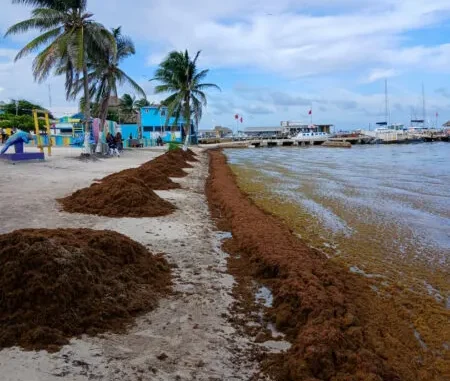

Belize’s Fight Against Sargassum: A Growing Caribbean Challenge
Belize has become one of the Caribbean nations most affected by the annual influx of sargassum seaweed. While sargassum is a naturally occurring brown algae that plays an important role in marine ecosystems offshore, the unprecedented quantities washing onto Belize’s beaches have created serious environmental, economic, and public health concerns.
From San Pedro and Caye Caulker to Hopkins and Placencia, coastal communities have experienced thick accumulations of seaweed along shorelines, producing foul odors, affecting marine habitats, and threatening tourism — one of Belize’s largest economic sectors. In response, Belize has developed a coordinated national strategy focused on cleanup operations, offshore interception, monitoring systems, public-private collaboration, and long-term blue economy solutions.
What Is Sargassum and Why Is It Affecting Belize?
Sargassum is a floating seaweed found in the Atlantic Ocean and Caribbean Sea. Scientists believe rising ocean temperatures, nutrient pollution, and changing ocean currents have contributed to increasingly large blooms over the past decade.
When massive mats of sargassum drift ashore in Belize, they begin decomposing rapidly. This creates a strong sulfur-like smell and can reduce oxygen levels in coastal waters, harming fish, coral reefs, and seagrass ecosystems. Tourism-dependent communities are especially vulnerable because beach conditions directly impact visitor experiences.
Belize’s National Sargassum Task Force
One of Belize’s most important responses has been the creation of the Belize Sargassum Task Force (STF). Initially formed in 2015 and expanded significantly after record-breaking influxes in 2018, the STF coordinates government agencies, municipalities, tourism stakeholders, scientists, and environmental organizations.
The task force focuses on:
- Monitoring and forecasting sargassum movement
- Coordinating beach cleanup operations
- Developing national response strategies
- Supporting tourism businesses
- Researching alternative uses for collected sargassum
- Promoting public awareness and education
The STF has become the backbone of Belize’s national management strategy, allowing multiple agencies to respond quickly during severe influx events.
Offshore Collection and Sargassum Barriers
Belize has increasingly shifted from reactive shoreline cleanup to proactive offshore interception.
In 2025, the Ministry of Blue Economy and Marine Conservation deployed specialized sargassum skimmer vessels near San Pedro, Ambergris Caye. These vessels remove seaweed before it reaches beaches, reducing cleanup costs and protecting marine ecosystems.
Local authorities have also experimented with floating corrals and barriers designed to redirect sargassum away from critical tourism zones. Government officials have described offshore collection as a critical component of Belize’s long-term strategy because removing seaweed before landfall minimizes environmental damage and improves beach conditions for residents and visitors alike.
Emergency Funding and Tourism Protection
Tourism remains central to Belize’s economy, making rapid response essential during major sargassum events.
The Belize Tourism Board (BTB) and the Government of Belize have implemented several financial relief programs over the years, including tax relief for coastal hotels, municipal cleanup funding, and duty exemptions for imported cleanup equipment.
In 2025, Belize’s Cabinet approved a nationwide Sargassum Emergency Response Plan after reports indicated a 70% increase in regional influx levels compared to 2022. The emergency plan allocated government funding to support beach cleanup operations and transportation of collected seaweed to disposal sites.
These initiatives aim to protect Belize’s tourism reputation while helping local businesses manage the significant costs associated with daily cleanup efforts.
Monitoring, Forecasting, and Technology
Belize has also strengthened its scientific monitoring systems to improve preparedness.
The Department of Environment introduced advanced forecasting tools, drones, and monitoring software to help track sargassum movement and predict shoreline impacts. The government’s collaboration with meteorological experts allows coastal communities to receive earlier warnings before major influxes occur.
This data-driven approach helps municipalities and tourism operators prepare equipment, coordinate labor, and reduce response times during peak seasons.
Community and Private Sector Collaboration
Belize’s response to sargassum has relied heavily on collaboration between government agencies, local municipalities, hotels, tour operators, and residents.
In communities like San Pedro and Caye Caulker, cleanup efforts often involve coordinated teams using manual removal techniques alongside mechanical harvesters. Hotels and local businesses frequently participate in daily beach maintenance to maintain tourism standards.
Public-private partnerships have become essential because the scale of the influx often exceeds what local governments can handle alone.
Turning Sargassum Into Economic Opportunity
Rather than viewing sargassum solely as waste, Belize is increasingly exploring ways to convert it into economic opportunity.
The Sargassum Task Force has encouraged research into byproducts and sustainable uses, including compost, biofuel, fertilizer, and construction materials. Government officials have emphasized that innovation and “value creation” could transform a recurring environmental challenge into part of Belize’s growing blue economy strategy.
This approach aligns with broader regional efforts across the Caribbean to create sustainable industries around sargassum management.
Challenges Belize Still Faces
Despite major progress, Belize continues to face significant obstacles.
The scale of annual sargassum blooms remains unpredictable, and cleanup operations are expensive and labor-intensive. Some areas still struggle with disposal methods, while environmental experts warn that improper removal techniques can damage beaches, turtle nesting habitats, and coastal ecosystems.
Additionally, tourism operators continue to express concern over the long-term effects of recurring influxes on visitor experiences. Social media discussions and traveler reports frequently highlight concerns about odors and beach conditions during peak sargassum months.
Belize’s Long-Term Vision for Sargassum Management
Belize’s approach to sargassum management has evolved from emergency cleanup to long-term national planning.
By combining government coordination, tourism support, scientific monitoring, offshore interception systems, and blue economy innovation, Belize is positioning itself as one of the Caribbean countries actively developing scalable solutions to the sargassum crisis.
While the challenge is far from solved, Belize’s response demonstrates how small coastal nations can adapt through collaboration, technology, and environmental resilience. As climate pressures continue affecting the Caribbean, Belize’s evolving strategy may become a model for regional sargassum management in the years ahead.
Conclusion
The sargassum influx remains one of the biggest environmental and economic challenges facing Belize’s coastal communities. However, through coordinated government action, tourism-sector partnerships, proactive cleanup systems, and investment in sustainable innovation, Belize has shown resilience in managing the crisis.
As the country continues refining its response, Belize’s experience highlights the importance of balancing environmental protection, economic sustainability, and community collaboration in the face of changing ocean conditions.
Be the first to comment